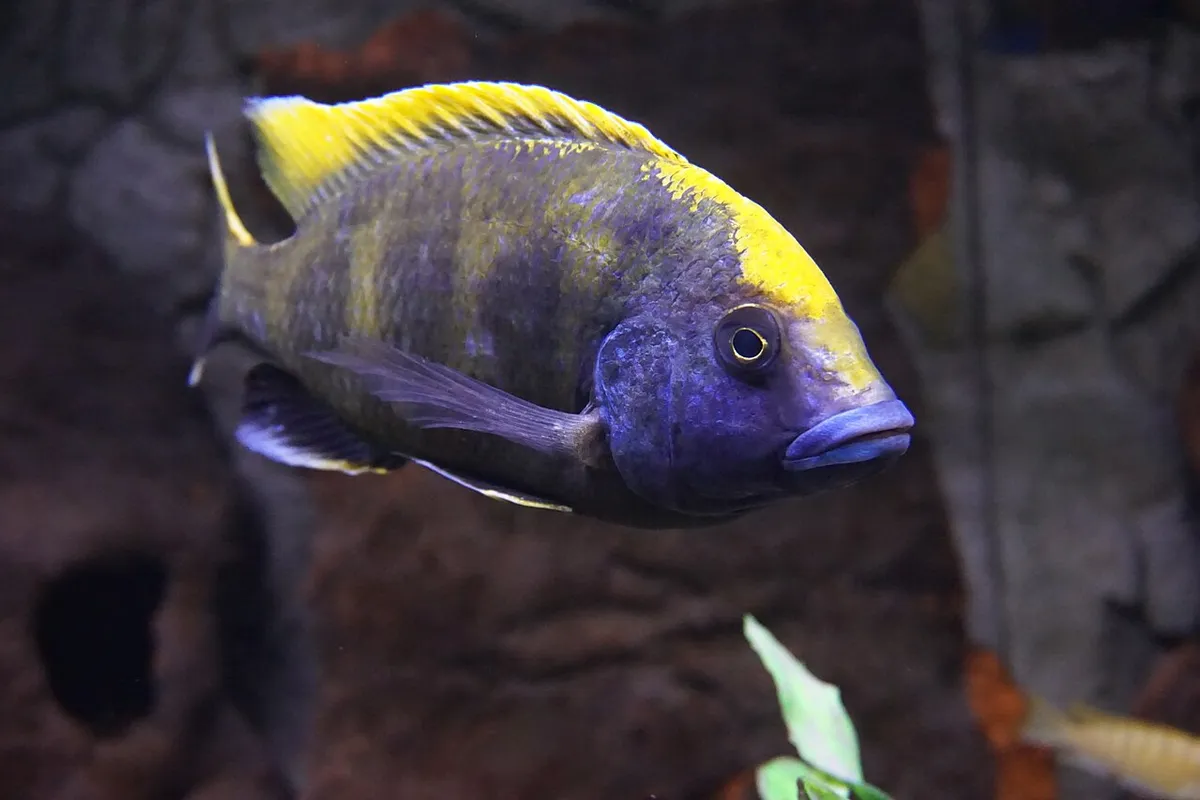
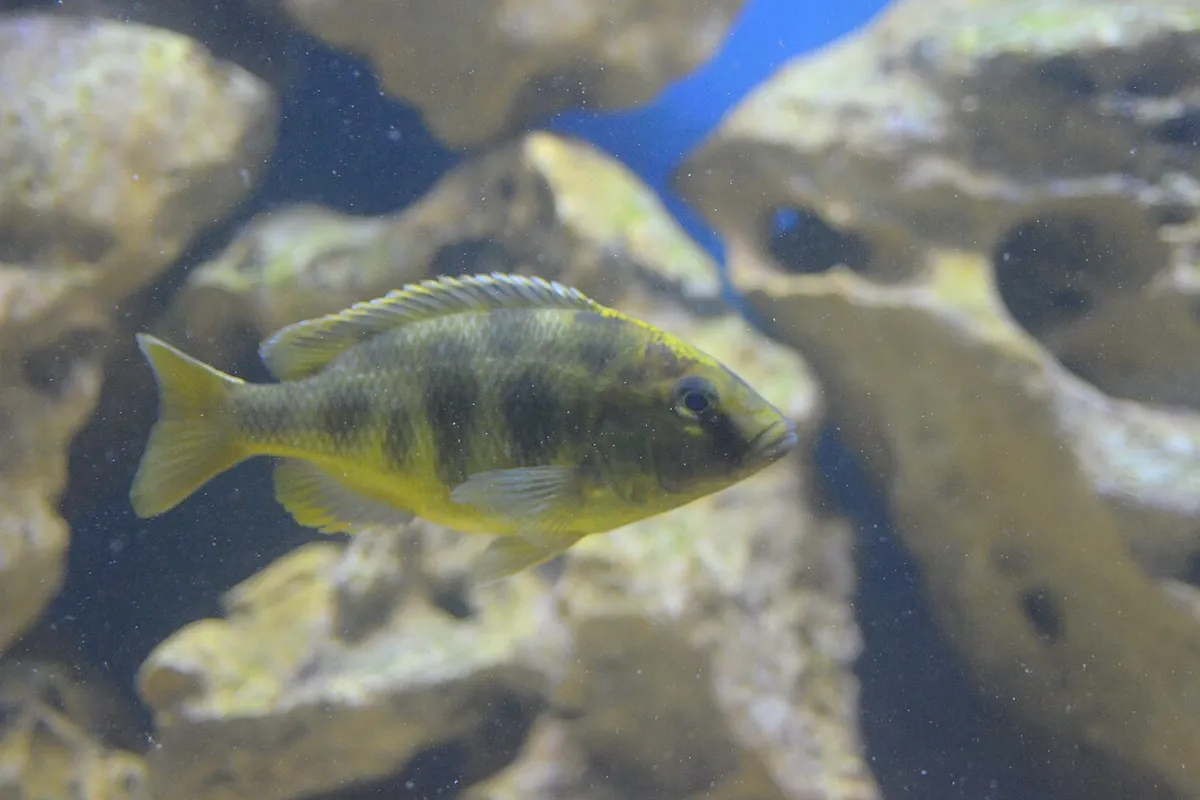
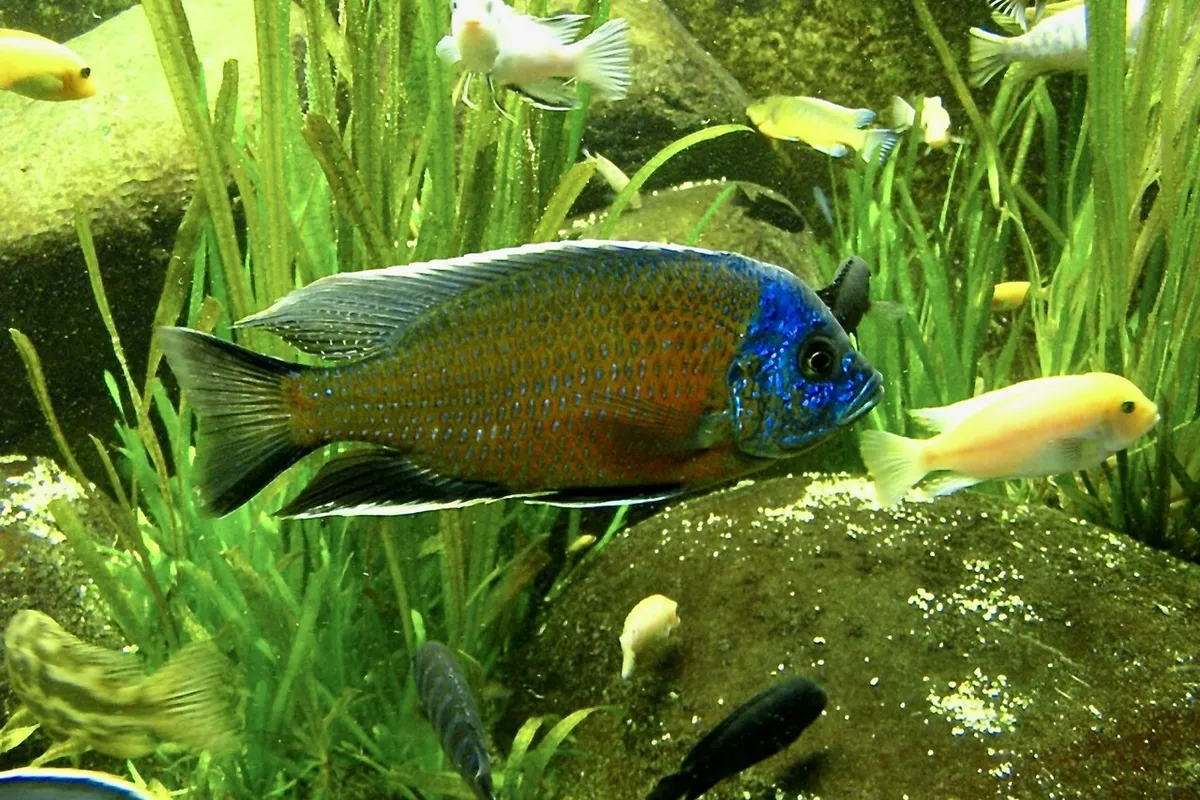
The venustus is one of the best-known haplochromine cichlids from Lake Malawi. Females and young fish wear a yellow body covered in brown, giraffe-like blotches. Mature males turn a deep blue on the face with a yellow back, and grow to about 25 cm.
Nimbochromis venustus is a predator with a famous hunting trick: it lies on its side on the sand, looking dead, and then snaps up the small fish that come to investigate. It needs a large tank and tank mates too big to eat.
Where venustus come from
The species is endemic to Lake Malawi in East Africa. It lives over sandy bottoms near rocky areas, where small cichlids gather.
Appearance and behaviour
The blotched pattern breaks up the outline of the fish against the sand. Males lose the pattern as they colour up, but it can return when they are stressed. Venustus are moderately aggressive, mostly towards their own kind and similar-looking haps.
Keep one male with three or more females, which spreads the male's attention.
Tank setup
An adult group needs at least 400 litres in a tank 180 cm or longer. Provide a large open sand area plus rockwork along the back. Use strong filtration, since these are big eaters. Plants are optional; tough species such as anubias may survive.
Water parameters

- Temperature: 24–28°C
- pH: 7.6–8.6
- Hardness: 10–20 dGH
Like all Malawi cichlids, they need hard, alkaline water. Our guide to rift lake chemistry explains how to set it up.
Feeding
Feed quality cichlid pellets, frozen mysis, krill and chopped prawn. Avoid beef heart and feeder fish, which increase the risk of bloat in Malawi cichlids. Feed once or twice a day.
Tank mates
Good companions are other large haps, such as Aulonocara peacocks in very large tanks, larger Copadichromis, and robust synodontis catfish. Small mbuna such as the yellow lab will be eaten once the venustus is grown.
Breeding
Venustus are maternal mouthbrooders. The female lays eggs in a pit dug by the male, picks them up and broods them for about three weeks. She releases 50–100 large fry that can eat crushed flakes and baby brine shrimp at once.
Common problems and lifespan
Malawi bloat, from poor diet or stress, is the main health risk. Aggression in undersized tanks is the other. They live ten years or more with good care.
Explore other topics
Dive into more aquarium guides across the site.