

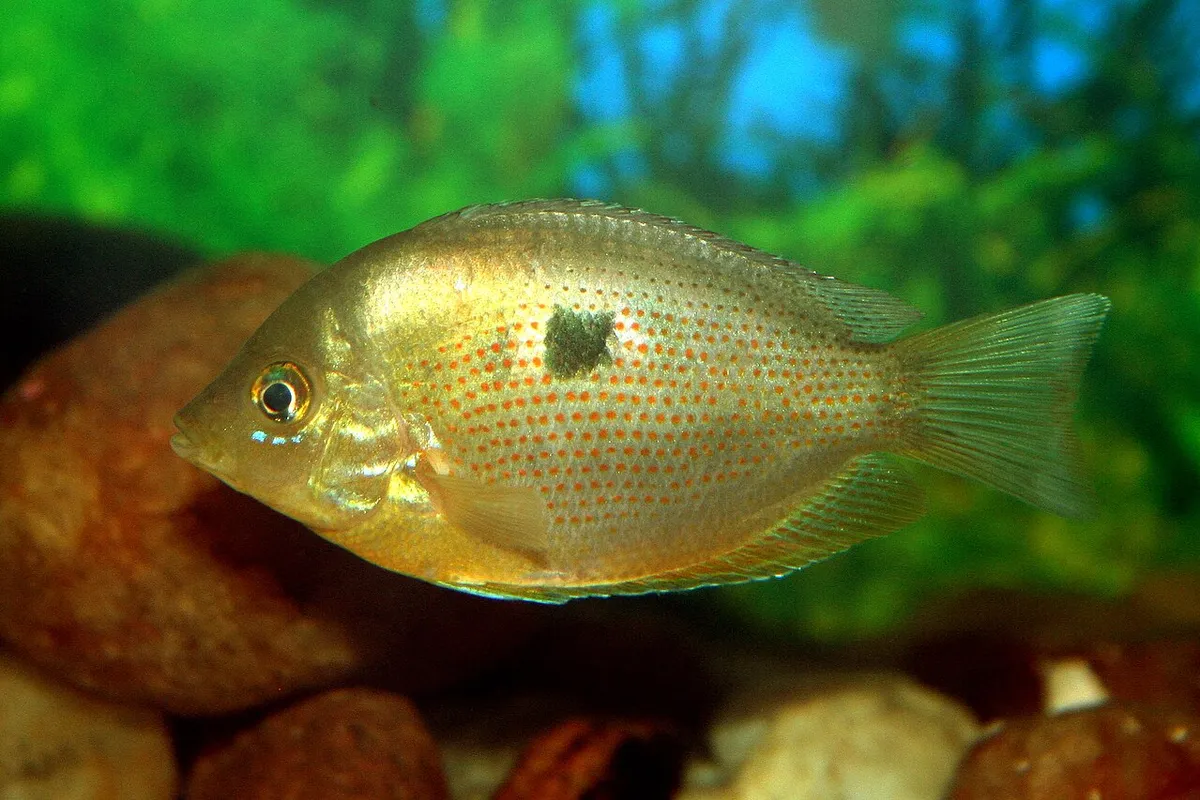
The orange chromide is one of only a few cichlids native to Asia. The wild form is golden yellow with rows of red dots and a dark blotch on the side. A fully orange variety is also bred for the trade. Adults reach about 8 cm, making this one of the smaller cichlids available.
Pseudetroplus maculatus, long known as Etroplus maculatus, is hardy and full of character. It does best with a little salt in the water and makes a great centrepiece for a small brackish tank.
Where orange chromides come from
The species lives in southern India and Sri Lanka, in coastal lagoons, estuaries and the lower reaches of rivers. Salinity there changes with the seasons, from almost fresh to fairly salty.
Appearance and behaviour
Breeding pairs darken, and their bellies and fins turn black. Chromides are territorial while breeding but otherwise only mildly aggressive. A bonded pair is the best way to keep them.
Tank setup
A pair needs at least 80 litres. Use sand, rocks and a few flat stones for spawning. Hardy, salt-tolerant plants such as Java fern and anubias work in low salinity.
Water parameters

- Temperature: 24–28°C
- pH: 7.5–8.5
- Hardness: 10–25 dGH
- Salinity: fresh to specific gravity 1.008
They survive in hard fresh water, but a low salinity of around 1.003–1.005 helps prevent disease. Measure it with a refractometer.
Feeding
Chromides are omnivores. Feed small pellets and flakes with some spirulina, plus frozen brine shrimp, mysis and bloodworms. In the wild, young fish also eat mucus from their parents' skin.
Tank mates
Good brackish companions include mollies, bumblebee gobies and small scats while young. Avoid very small or delicate fish when chromides are breeding.
Breeding
Pairs clean a flat stone and lay rows of eggs, which hatch after a few days. Both parents move the wrigglers to pits in the sand and guard the free-swimming fry. The fry graze on their parents' skin mucus as well as baby brine shrimp.
Common problems and lifespan
Fungal and bacterial infections are more likely in soft or acidic fresh water. With hard, slightly salty water they live five to eight years.
Explore other topics
Dive into more aquarium guides across the site.