

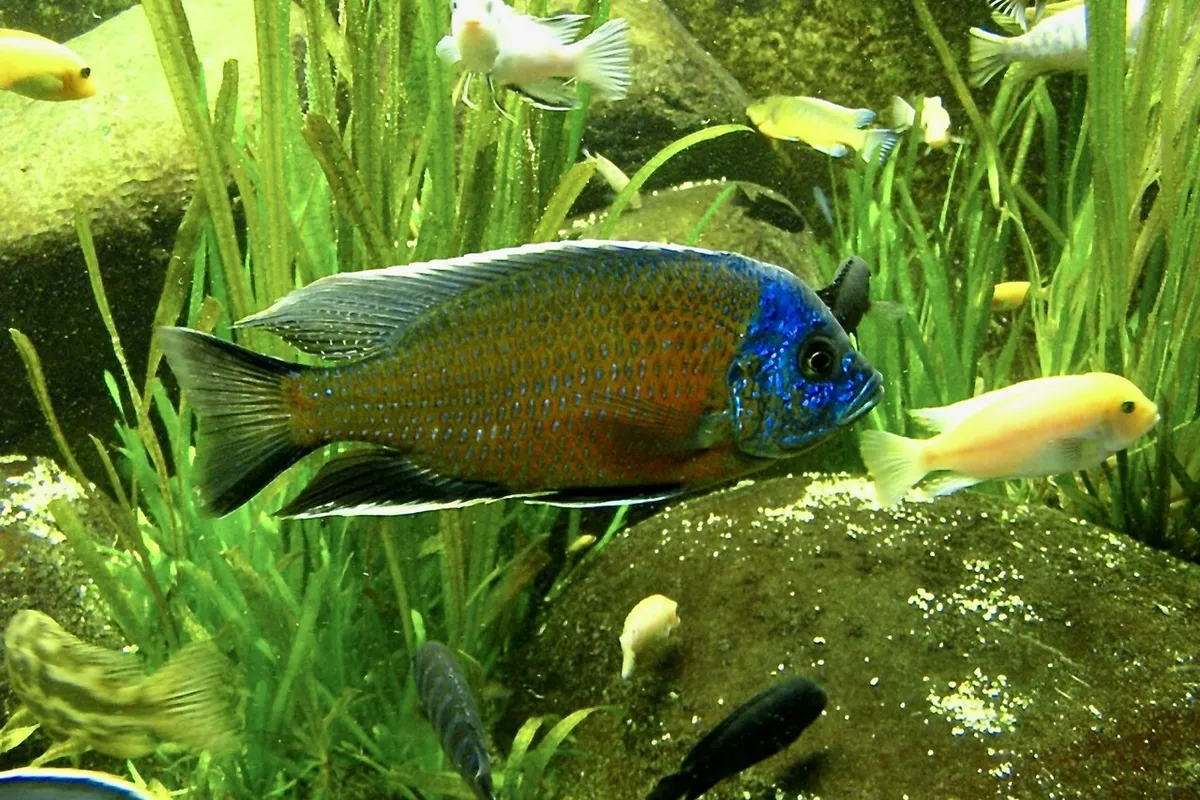
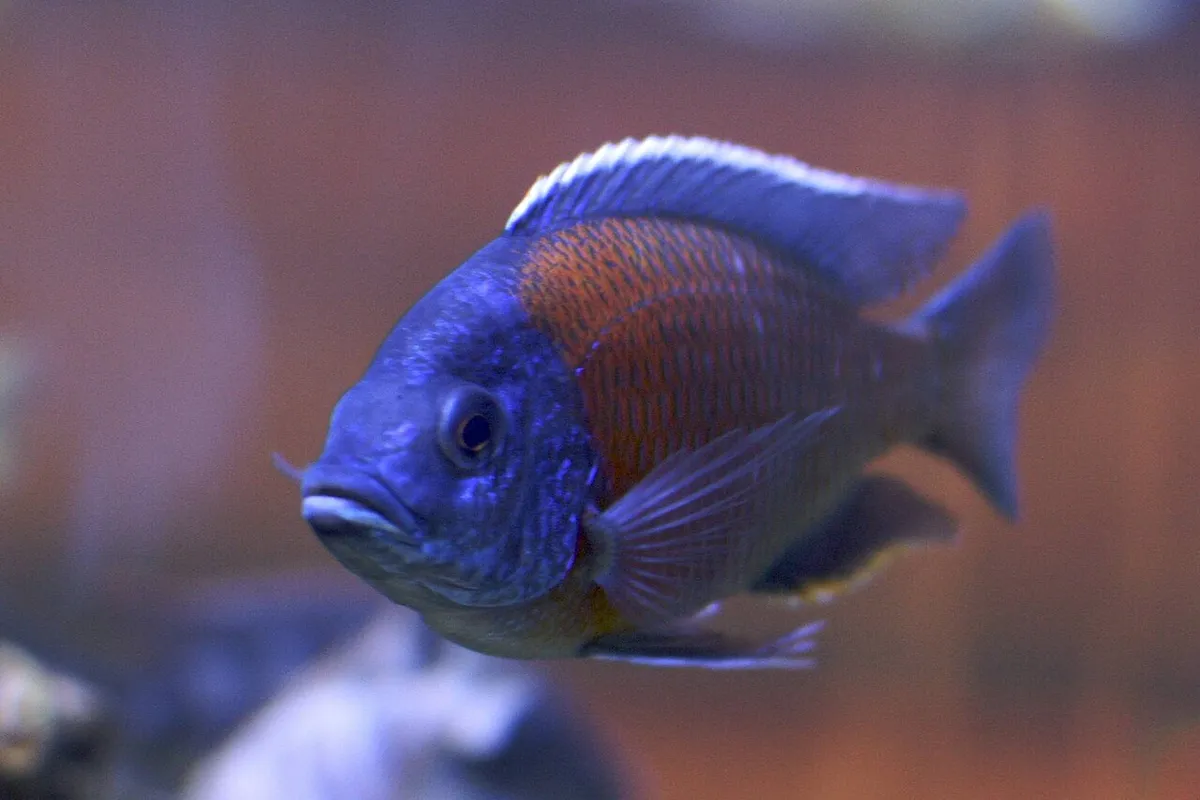
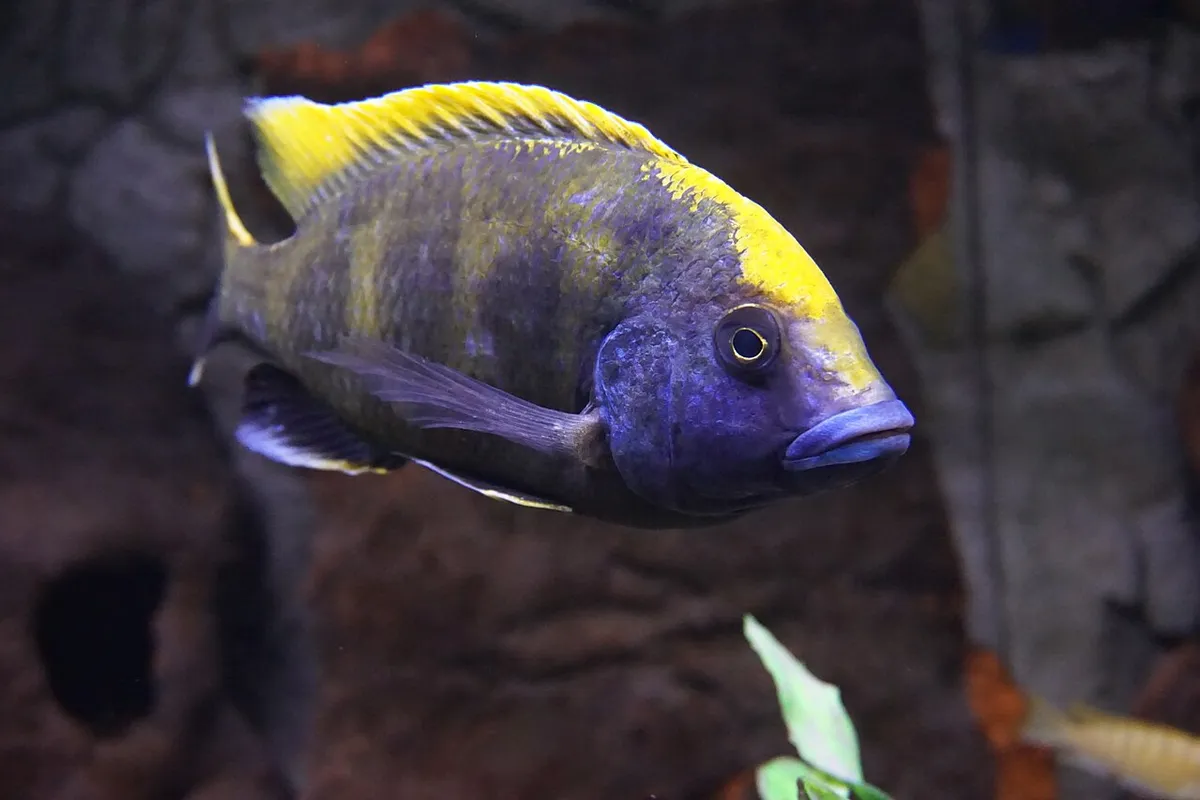
The redfin hap is a peaceful, open-water cichlid from Lake Malawi. Mature males have a metallic blue head and fins, with the body ranging from orange-red to gold depending on the collection site, sold under names such as Kadango, Mbenji and Eureka Red. Females are silver-grey.
Copadichromis borleyi grows to about 15 cm. It is one of the gentler Malawi cichlids and a good choice for a hap and peacock tank.
Where redfin haps come from
The species is endemic to Lake Malawi. It lives over rocky areas, often in loose schools near large boulders, feeding on zooplankton in the water column.
Appearance and behaviour
Males take a year or more to colour up fully. They defend a spawning site loosely but rarely chase hard. Keep one male with three or more females, or several males in a large tank.
Tank setup
A group needs at least 300 litres in a tank 150 cm or longer. Use sand and some rockwork, but leave plenty of open water in the middle, where they like to cruise. Good filtration and steady water quality are more important than decoration.
Water parameters

- Temperature: 24–28°C
- pH: 7.6–8.6
- Hardness: 10–20 dGH
See hard water and rift lake chemistry for how to keep pH and hardness stable.
Feeding
In the wild they eat plankton, so small foods suit them. Feed quality cichlid pellets and flakes with frozen mysis, brine shrimp and cyclops. Avoid heavy, high-fat foods such as beef heart.
Tank mates
Good tank mates are other peaceful haps and peacocks, such as the peacock cichlid, plus synodontis catfish. Avoid aggressive mbuna and large predators such as the venustus when the redfins are small.
Breeding
Redfin haps are maternal mouthbrooders. The female carries the eggs and fry for about three weeks, then releases them. Move a holding female to a separate tank a few days before release if you want to save the fry.
Common problems and lifespan
Malawi bloat and hybridising with other haps are the main issues. Keep only one Copadichromis species per tank. They live eight to ten years.
Explore other topics
Dive into more aquarium guides across the site.